RAF Crosslaw
Home to 617 Signals Unit
Welcome to Coldingham History
Operational from 16th April 1953 to the 31st August 1956
Operational from 16th April 1953 to the 31st August 1956
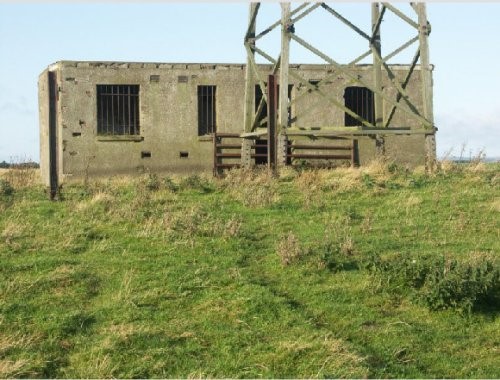
RAF Crosslaw was Home to 617 Signals Unit and was a Chain Home Extra Low (C.H.E.L) Radar Station equipped with a Type 14 Radar and a R2 underground operations bunker. It was operational from 16th April 1953 to the 31st August 1956. Kevin Lloyd-Jones
RAF Crosslaw was a C.H.E.L site equipped with a R2 underground operations block and was handed over to the RAF on the 6th January 1953 from Marconi with Air Commodore R.L Phillips, C.B.E, A.M.I.E.E in attendance with other representatives from the Air Ministry, HQ Fighter Command, HQ 12 Group, HQ 90 Group and the Sector Operations Centre at Barton Quarry.
Operations did not commence until the 16th April 1953 under the command of Flight Lieutenant J.C.F Williams, some five days after the main body of the operational staff had been accommodated in the new station domestic buildings some 2 miles to the South East in the village of Coldingham. Prior to this date the Unit had taken part in two Caledonian Sector Exercises.
The first of these exercises was conducted on the evenings of the 9th and 10th of March 1953. Radar operators were supplied by RAF Macmerry an airfield some 39 miles to the North West where they were temporarily accommodated while the domestic site had been under construction.
In order to provide communication between the controllers in the R2 bunker at RAF Crosslaw and the intercepting aircraft, two VHF/UHF multi-channel radio transmitter and receiver blocks were built at remote sites. The photo here is of the receiver site which exists off the Dowlaw Road some 2.50 miles to the North West of the Operations Site. The receiver Site still has its 60 feet wooden aerial standing alongside and is one of only two that are still extant. The other one being at the ROTOR site at Ventnor Isle Of Wight. Photo By J M Briscoe 2010.
Although no interceptions were made until the latter part of the exercise, the effort in installing the equipment was deemed a success in the training it provided to the controller and operators manning it.
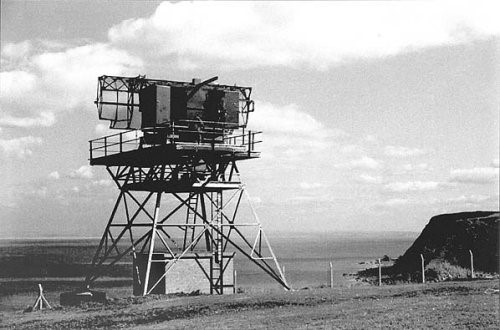
Type 14 Radar at RAF Hartland Point in c.1982. Crosslaw was fitted with a similar Type 14. Photo from the RAF Air Defence Museum Neatishead
The exercises provided invaluable training for the operational and engineering staff at Crosslaw and allowed them to sharpen operational and technical skills honed during the early work up phase of the Units operational status. Sector command at Barton Quarry took an avid interest in the Units capability and dispatched various staff to the Unit to evaluate operational effectiveness throughout September. Total hours for the month of September were not exhaustive despite the high temp of operations and totalled 272 hours and 14 minutes.
Aerial View of RAF Crosslaw Domestic Site c.1980s. All traces of the former RAF presence at this site have now gone apart from the Married Quarters on the A1107 outside the Caravan Park. Photo by Crosslaw Caravan Park.
The OC reported continuing problems with the domestic accommodation throughout October with defects in roof beams drying and cracking and falling plaster falling around hot water pipes. There was two additions to the officer establishment with Flt Lt Fenwick posted in from Middle Wallop on the 5th October and Plt Off O'Dwyer from Lichfield on the 22nd October taking the established strength to 4.